We send a question. You send back the answer.
A free card for almost every day of the month. Draw your answer, send it in, and we build the answers into something real — a gallery, a film, a card set.
Draw the cards
Download the cards for any month and draw your answer. That's the whole free level — one question, one drawing, into the gallery.
Work on the projects
Film, write, build and produce inside real projects — with tutorials, a crew to work with, and your name in the credits.
Build a project with us
We develop participatory programmes and media for families — and test them with real ones before you launch.
One card. One drawing. That's it.
Each card takes a real day in the calendar — Dot Day, Podcast Day, Ozone Day — and gives one fact, one thing to draw and one question. No correct answer, and no age limit at either end.
- 1Pick a day and print the card
- 2Draw your answer on the blank side
- 3Photograph it and upload
- 4It goes in the gallery with your first name and age
September 2026
14 cards · freeWhere the artist is under 18, a parent or guardian signs one short permission form. Nothing but a first name, age and country is ever published.
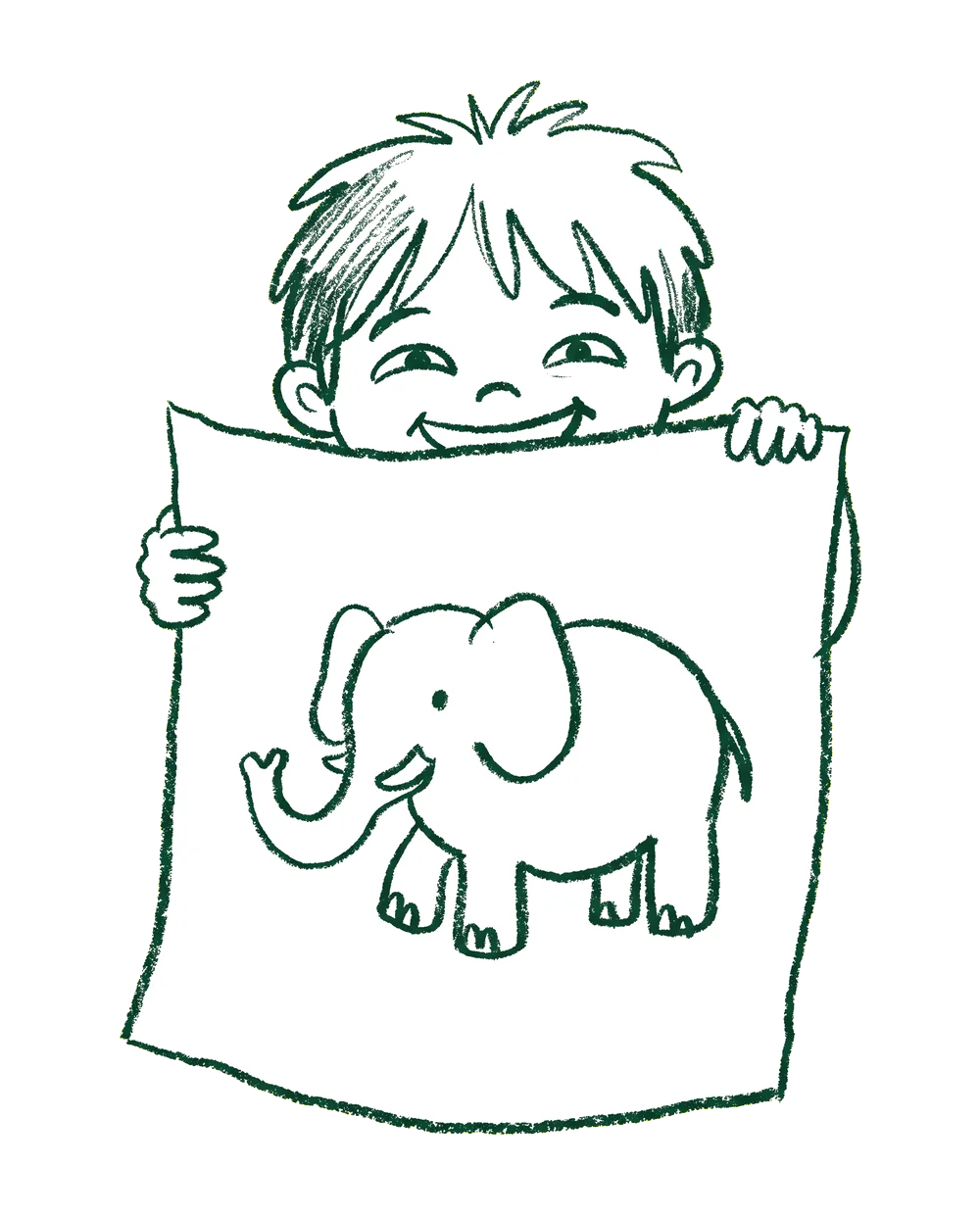
Wildlife Day
Want to film it, write it or build something instead? That's what membership is for.
Ten kids made an animated film about biodiversity.
This is what happens to the answers. Ten young co-creators researched it, designed the creatures, drew the frames and recorded the voices. We're in the edit now — and every one of them is in the credits by name.
We'll send one email when it's out. Nothing else.
Trailer · coming soon
Co-created by
One card, a dozen answers
Same question, different countries, wildly different drawings. This is the part most people look at before they decide to send their own.


Published with permission, first name and age only — and yes, the grandparents send drawings too.
Cards published so far
Days covered this month
Drawings in the gallery
Young co-creators in our first film
How a question turns into a thing
Every project runs the same four steps, whether it takes an afternoon or a year.

Notice
Something makes you curious and won't leave you alone.

Discover
Read, ask people, take things apart, get it wrong twice.

Create
Turn what you found into something a stranger can experience.

Share
Publish it, screen it, exhibit it — or hand it to the next family.
Sometimes the result is a drawing. Sometimes a short film, a game, an activity box, a podcast episode or a room you can walk into.
Members: the projects behind the cards.
Everything past the drawing. Members work on real productions — and everything published carries the names of the people who made it, including the youngest ones.
This Day My Way, extended
Answer the cards in any format — film, audio, writing, models — with tutorials that show how.
Mess Like an Artist
A course and an art kit made with partner studios, for families to do together. Ages 6+ with an adult.
Biodiversity — animated short
Ten young co-creators researched, designed, animated and voiced it. In the edit now, credits by name.
Family Co-Lab
In-person sessions at the Innovation Hub: cameras, sound, a space to make a mess in, and a crew.
What people say about it
From families who send work in, and from the organizations we've built things with.
“[Quote from a parent — what changed at your kitchen table. Two or three sentences, in their own words.]”
“[Quote from a young maker — what they made and what surprised them. Keep their voice, don't tidy it up.]”
“[Quote from a partner organization — what we delivered and what it did for their audience.]”
Placeholders. Real quotes only — and we ask permission in writing before publishing anyone's words, including a child's.
Don't just make things for families. Make them with families.
We develop participatory programmes, media and activities with museums, science centres, schools, libraries, festivals and nonprofits — and we can bring real families into the process at whatever stage is useful.
What we make
- Video, documentary and animation for exhibits and campaigns
- Podcasts and audio guides, including family-hosted episodes
- Interactive activities, games, quests and trails
- Activity boxes, kits and printed materials
- Immersive and installation content
- A custom card series built on your collection or theme
What families do in it
- Concept sessions: what actually makes them stop and look
- Prototype testing before you build the real thing
- On-camera hosting, interviews and voice work
- Producing content that ships in the final piece
- Documented feedback you can quote in reports and grant applications
How it runs
A short brief call, a co-creation sprint with families, a tested prototype, then production and delivery. Three to twelve weeks depending on scope — and you can stop after the prototype if it isn't working. That's the point of testing it.
Ways to work together
- One-off workshop or family day at your venue
- A season of programming
- Custom card series licensed to your institution
- Full production contract
- Joint grant application as your nonprofit partner
The things you'll ask before anything else
Useful to bring: your audience, your timeline and a rough budget range.
Built through collaboration
We work with studios, educators, artists, filmmakers, community groups and institutions. Some bring the expertise, some bring the audience, some bring the room.
Interested in working together? Here's how it runs. Want new cards and project news by email? Join the mailing list.
SciNatured is a not-for-profit media and co-creation initiative for families — kids, parents, grandparents, and bigger kids of every age.
We put curiosity, art, science, storytelling and real production in the same room, and turn questions into things other people can actually experience. Everything made with families belongs to the project, and a share of what it earns goes back to them.