SciNatured

SciNaturedSciNaturedSciNatured
Home
peace
Explore
contribute
Downloads
Members Only
Join The Club
Creator Clircle

SciNatured

SciNaturedSciNaturedSciNatured
Home
peace
Explore
contribute
Downloads
Members Only
Join The Club
Creator Clircle
More
  • Home
  • peace
  • Explore
  • contribute
  • Downloads
  • Members Only
  • Join The Club
  • Creator Clircle
  • Sign In
  • Create Account

  • Orders
  • My Account
  • Signed in as:

  • filler@godaddy.com


  • Orders
  • My Account
  • Sign out

Signed in as:

filler@godaddy.com
  • Home
  • peace
  • Explore
  • contribute
  • Downloads
  • Members Only
  • Join The Club
  • Creator Clircle

Account

  • Orders
  • My Account
  • Sign out

  • Sign In
  • Orders
  • My Account

⚡The Movie-Powered Guide to Energy! 🎬⚡

🌞 Solar Energy🌞

💧 Water Energy (Hydropower)

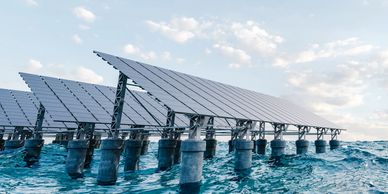
🌞 Solar Energy🌞

Sunlight is converted into electricity (solar panels) or directly into heat. 

🎬 Movie moment: WALL-E — that little robot recharges every single day just by standing in the sun, like a solar-powered selfie stick. 

Challenge: on a sunny day, use a magnifying glass to focus light on dark paper for a couple seconds (outside, with supervision) — watch light turn into heat. 🎉 Bonus twist: put a chocolate square in the sun and another in the shade — race to see which one melts first.
💨 Wind Energy💨

💧 Water Energy (Hydropower)

🌞 Solar Energy🌞

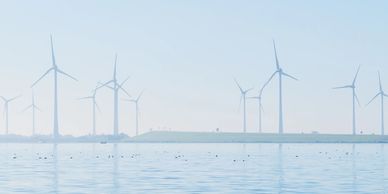
Moving air spins turbine blades converted into electricity.

🎬 Movie moment: Up — Carl's house full of balloons drifts wherever the wind decides. Wind moves things without even touching them. 

 Challenge: tie a thread to the axle of a paper pinwheel, and tie a paperclip to the other end. Blow steadily on the pinwheel and watch it wind up the thread, lifting the paperclip off the table — real wind energy being converted into mechanical work, the same basic principle as a wind turbine. 🎉 Bonus twist: try pinwheels with different numbers of blades — does more blades lift the paperclip faster?
💧 Water Energy (Hydropower)

💧 Water Energy (Hydropower)

💧 Water Energy (Hydropower)

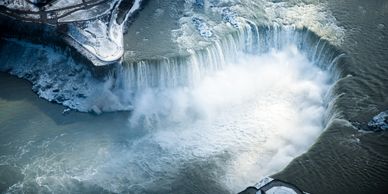
Falling or flowing water spins turbines in dams. 

🎬 Movie moment: Moana — the ocean has SO much power it practically has its own personality in this movie. 

Challenge: make a mini water wheel from a plastic bottle cap with cardboard "blades" on a pencil, then pour water on it from a cup — watch it spin. 🎉 Bonus twist: try flat blades vs. curved (spoon-shaped) blades — which design spins faster?
🌊 Tidal & Wave Energy 🌊

🌊 Tidal & Wave Energy 🌊

💧 Water Energy (Hydropower)

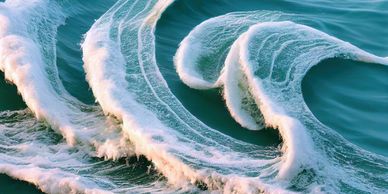
The ocean's motion — tides and waves — can also be turned into energy. 

🎬 Movie moment: Finding Nemo — Crush and the sea turtles literally surf a powerful ocean current (the East Australian Current) without lifting a fin. "Righteous, dude." 

Challenge: in a basin of water, make a wave with your hand and try to "push" a paper boat to the other side without touching it directly. 🎉 Bonus twist: now make one giant wave instead of small ones — does the boat survive?
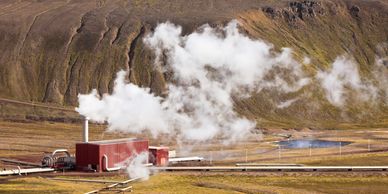
🌋 Geothermal Energy🌋

🌊 Tidal & Wave Energy 🌊

🌋 Geothermal Energy🌋

Heat from deep inside the Earth heats underground water, and that heat can warm buildings directly or spin turbines.

🎬 Movie moment: How to Train Your Dragon — Berk sits right next to a rumbling volcano. That heat is basically Earth's furnace, right under everyone's feet. 

 Challenge: fill a tall clear glass with cold water and let it settle. Using a spoon, gently drop a few drops of warm water dyed with red food coloring along the inside of the glass, without stirring — watch it rise and swirl upward. That's convection: the real process that carries heat from deep inside the Earth up toward the surface, creating hot springs and geothermal energy. 🎉 Bonus twist: try the opposite — drop cold, blue-dyed water into a glass of warm water and watch it sink.
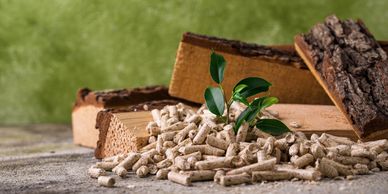
🌾 Biomass Energy🌾

🌊 Tidal & Wave Energy 🌊

🌋 Geothermal Energy🌋

Plants and organic waste can be burned, releasing the chemical energy stored inside as heat. 

🎬 Movie moment: Back to the Future Part II — Doc Brown dumps banana peels and leftover beer straight into "Mr. Fusion" and powers a time machine. That's biomass energy... with extra time-travel flair. 

Challenge: with an adult, place a small tea light candle under a metal cup holding a little water, and light it. Time how many minutes it takes for the water to get noticeably warmer (or use a kitchen thermometer) — that's real chemical energy stored in the wax being released as heat through burning, the same basic principle used to generate power from biomass. 🎉 Bonus twist: compare with a slightly bigger or smaller candle — more stored fuel usually means more energy released overall.

Previously on…

“Greetings from Corfu!”

Vintage postcard of a smiling boy holding birds with a turtle on his lap in Corfu.

As usual, one morning May opened the mailbox and pulled out a rather strange postcard.

On the front was a picture of a boy, a stamp — and the words: “Greetings from Corfu!”

On the back, a message read:

Once, this boy brought a scorpion with its babies to a family dinner — in a matchbox. (It was a family dinner, after all, so the scorpion came with its family.)

The boy did poorly at school. So poorly, in fact, that he was diagnosed with “school sickness.” But that is not what made him famous.

You will find his book on the bookshelf, on the top shelf to the left — at least, that’s where I left it the last time I came to visit. Today was his birthday.

With regards, O.T. & Lëliy

🐌📬 “A postcard from O.T.!” May exclaimed.

Three children in festive sweaters looking at a holiday card.

 “A postcard from O.T.!” May exclaimed.

“Do you remember him? He lives in the forest — with his pet raccoon, Lëliy! And he loves sending riddles the old-fashioned way.”

“And I love solving them,” Al added.
“Last time he left us a whole message drawn on a rock — remember? We found it when we went to Muskoka!”

“Yes! And I think he can understand the language of animals,” Sofay said thoughtfully.
“As if he has some kind of magic powder — like in The Flying House by Durrell!
By the way… I think the boy in this photo could really be him.”

“You mean O.T.?” Al asked.

“No — Durrell,” Sofay replied.
“The postcard looks old, and Corfu is an island in Greece where he grew up!”

“I didn’t know there were scorpions in Greece,” Al said.

“Well, I do know that scorpions glow under ultraviolet light,” May smiled.
“But that’s a whole different story. Come on — let’s run to the library!”

Just as O.T. had written, on the top shelf to the left, the children found the book:
My Family and Other Animals by Gerald Durrell.

Read more

What's Up?

What's Up?

Postcard addressed to O.T. in the Deep Woods, with a Canada stamp and a casual greeting.

“Let’s send him a reply,” May suggested.
“A riddle too!”

“Greetings from Niagara Falls!” Al laughed.
“And I know exactly which one — look at the date.”

January 9 — Word Nerd Day… and...
May read from a list of unofficial holidays.

They looked at each other.
A greeting.
A word.
A clue.

Perfect.

On the back of the postcard, they wrote just one question:

What’s up? 


So—can you guess what other day you can celebrate on January 9, in addition to Word Nerd Day?
(Hint: it’s connected to waterfalls… and their power.)

Clue: look at the kids (below) — and the question they wrote.

⚡What’s Up at Niagara Falls?⚡

🎉 It was Static Electricity Day

It wasn’t the wind.
And it wasn’t magic.

It was static electricity.


Besides World Nerd Day, there was one more day hidden in the postcard.


💧⚡ What do waterfalls have to do with static electricity?

When millions of water droplets crash into rocks and air, they break apart.
Tiny charges jump around.

The air near big waterfalls can become electrically charged — just like when you rub a balloon on your sweater.

That’s why near waterfalls you might feel:

  • extra fresh air 🌬️ 
  • tiny sparks in winter ❄️ 
  • hair doing strange things 😮
     

Static electricity loves:
✔️ movement
✔️ friction
✔️ dry winter air

Niagara Falls has all three.


🎈 Try the Postcard Experiments at Home


1️⃣ Niagara Hair Test

Rub a balloon on a sweater.
Watch your hair rise — just like on the postcard.

💡 Same idea, smaller scale.

2️⃣ Falling Water Trick

Turn on a thin stream of water.
Bring a charged balloon close.

🌊 The water bends — as if it’s being pulled.

Just like mist near a waterfall reacts to charged air.

3️⃣ Paper Snow Jump

Cut tiny paper “snowflakes.”
Charge a balloon and hold it above.

❄️ They jump up like winter magic.


🌩️ Big Thought

Lightning is just giant static electricity in the sky.

Niagara Falls is like a practice zone — showing how energy moves, gathers, and escapes.

Small sparks…
Big ideas.


⚡ Niagara’s Power Story (Coming Up)

Niagara Falls doesn’t just show electricity — it makes it.Right beside the falls, the Niagara Power Station turns falling water into electricity that has powered homes and cities for over a century.From tiny static sparks… to turbines, generators, and light.
🔎 We’ll be exploring this next:

  • how the power station works 
  • how falling water becomes electricity 
  • and how nature became one of the world’s first power plants  

We’ll be adding more electricity stories, experiments, and discoveries to this page very soon.
💛 Stay curious. Stay zappy. — SciNatured

⚡ Electricity — A Story You Can Follow

From the first strange effects to the power we use every day

Chapter 1 — The First Strange Thing People Noticed

(Static electricity)


Long ago, people noticed something odd.

When amber was rubbed with fur, small pieces of dust and feathers moved toward it.
Nothing was pushing them. Nothing was pulling with a string.
But the effect happened again and again.

This was noticed in Ancient Greece, around 600 BCE.
The Greek word for amber was ēlektron.
Much later, that word became electricity.

At the time, people did not know about electrons.
They only knew that rubbing and separating objects caused invisible effects.


What is happening here

Inside all objects are tiny particles called electrons.
Electrons can move from one material to another.

When two materials touch and separate:

  • some electrons move 
  • one object ends up with extra electrons 
  • the other has fewer
     

This difference causes attraction.
Sometimes electrons move suddenly, and a spark appears.

This is called static electricity.


You can observe this

  • Rub a balloon with fabric and bring it near a wall 
  • Hold a charged object near a thin stream of water 
  • Move a plastic LEGO brick quickly and press it to a door
     

Each time, electrons move and nearby charges rearrange.

Static electricity appears easily, but it does not last long.


Chapter 2 — A New Question

Can electricity keep moving?


People learned how to make electricity appear, but it disappeared quickly.
This led to a new question.

Could electricity be made to continue, instead of stopping after one jump?

In 1800, Alessandro Volta found a way.


He built the first battery using layers of metal and chemicals.

The battery did something new:

  • electrons did not jump once 
  • they moved continuously through a path

This was electric current.


What changed

Electrons still moved, but now:

  • there was a push (from the battery) 
  • there was a path (a wire) 
  • the movement formed a loop
     

As long as the loop stayed closed, electricity continued.


You can observe this

  • Connect a battery, a wire, and a small bulb 
  • Break the loop and watch the light turn off 
  • Close it again and watch it turn on
     

Electricity now moved in a controlled way.


Chapter 3 — Making Electricity from Motion

(No battery required)


Batteries could run out.
Scientists wondered if electricity could be created without chemicals.

In 1831, Michael Faraday discovered something important.

When magnets move near a wire, electrons in the wire begin to move.

This meant:

  • motion could create electricity 
  • spinning and turning mattered
     

This idea is called electromagnetic induction.


Why this mattered

Once electricity could be made from motion, it could be made again and again:

  • water turning turbines 
  • wind spinning blades 
  • steam pushing wheels 
  • hands turning cranks
     

You can observe this

  • Use a hand-crank generator and feel resistance as a light turns on 
  • Spin faster and notice the light grow brighter 

Electricity increased with speed.


Chapter 4 — Two Ways Electricity Moves

(AC and DC)


As electricity became more useful, people discovered it could move in different ways.

Thomas Edison worked with Direct Current (DC).
In DC, electrons move in one direction.
Batteries use this type of electricity.

Nikola Tesla developed Alternating Current (AC).
In AC, electrons change direction many times each second.
This allows electricity to travel long distances efficiently.

Homes today receive electricity using AC systems.


You can notice the difference

  • A battery-powered circuit uses DC 
  • A hand generator produces AC 

Both use electrons, but the motion is different.


Chapter 5 — Electricity All Around You


Electricity does not change its rules when it enters machines.

In every case:

  • electrons move 
  • energy is transferred
     

This movement becomes:

  • light in a lamp 
  • motion in a motor 
  • heat in a stove 
  • information in computers
     

Different devices use electricity differently, but the behavior underneath is the same.


Chapter 6 — Understanding Enough to Recreate It


Electricity does not depend on modern devices.
Modern devices depend on electricity.


If systems stopped working, electricity could still be created by:

  • friction and static charge 
  • chemical reactions 
  • spinning generators 
  • converting motion into current
     

To recreate electricity, it helps to look for four things:

  • electrons 
  • movement 
  • a difference that pushes them 
  • a path to follow
     

Every experiment in this story uses those same ideas.


Closing Thought

Electricity was noticed before it was named.
It was used before it was explained.
It can be observed, guided, and recreated.

Once you understand how electrons move,
the world becomes easier to read.


Preorder one of our unofficial holiday calendars

celebrating strange little days, small joys, and “why not?” moments.

ODDAYS • unexpected, quirky holidays for curious minds  

DAYMADE • small celebrations that turn an ordinary day into something special  

WHYDAY • playful holidays celebrated for no particular reason


✨ No payment yet — just gathering interest.Join the list and help shape which calendar comes first.

Leave a Trace

This site is protected by reCAPTCHA and the Google Privacy Policy and Terms of Service apply.

🐌✨ Want to receive real snail mail with riddles and secrets?

You can now order it directly from our website --  just real letters, art, stories, puzzles, and surprises delivered to your mailbox.

The first 10 orders will receive a special gift — a pen with invisible ink, visible only under ultraviolet light.

Almost like a scorpion

Order Now

Copyright © 2026 SciNatured - All Rights Reserved.

  • Explore
  • contribute
  • About Us
  • Downloads
  • Story Time
  • FAQ
  • Members Only
  • Contact Us
  • Join The Club
  • Birds of Ontario
  • pilot
  • pilot_ru

This website uses cookies.

We use cookies to analyze website traffic and optimize your website experience. By accepting our use of cookies, your data will be aggregated with all other user data.

Accept